TL;DR
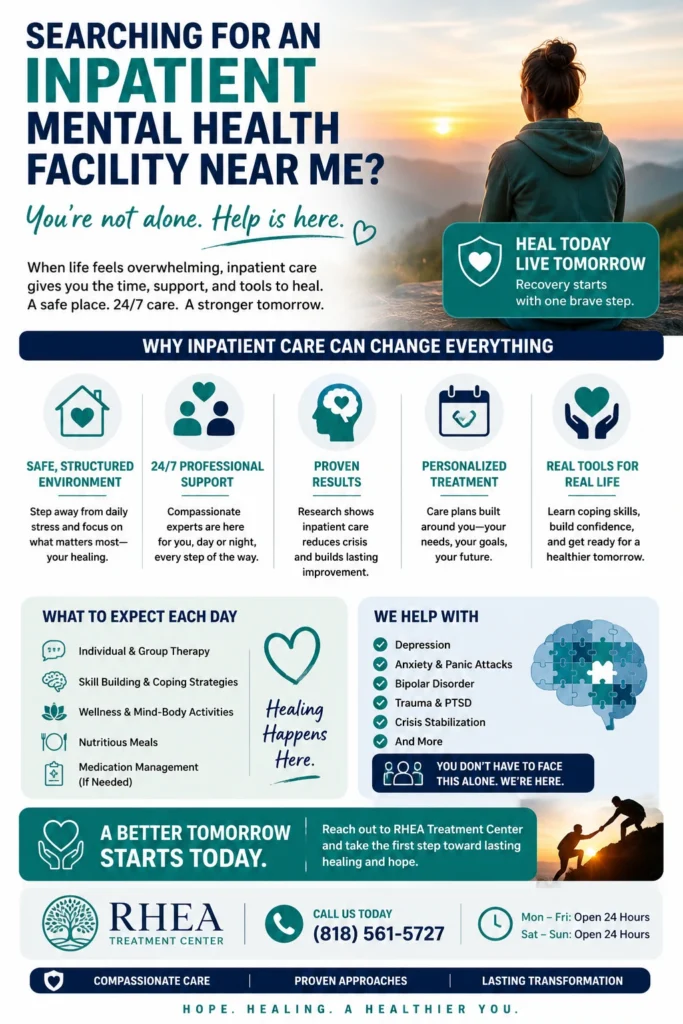
If you’re searching for an inpatient mental health facility near you, you’re taking an important first step. Inpatient care offers a safe, structured environment where you can get professional support, develop healthy coping skills, and start your journey toward lasting recovery.
Some days just feel like you’re carrying around a heavy backpack filled with rocks. You wake up feeling tired, even after a full night of sleep. You think, “Maybe it’s just stress.” Life sometimes throws a lot at you, and it can feel like there’s no break in sight.
Then, day after day passes by. You find yourself smiling less at the things that once brought you joy. Your friends notice your silence. Your family starts asking if you’re okay. You reply with the same tired answer each time: “I’m fine.” But are you really?
Many people start pondering that question long before they start looking up an inpatient mental health facility near them. They don’t just wake up one morning, snap their fingers, and decide they need constant care. No. They usually spend weeks (or maybe even months) hoping things will just magically get better.
Sometimes they do, and sometimes they don’t.
Here at RHEA Treatment Center, we understand how tough it is to ask for help. But guess what? Reaching out isn’t a sign of weakness. It’s usually the first big step toward getting your life back. Whether it’s severe depression, anxiety that feels like a storm cloud, trauma, or bipolar disorder, the right support can help you breathe and heal without the daily chaos pulling you in all directions.
So here’s a question for you: Is it a good idea to keep carrying everything alone?
Why Choose an Inpatient Mental Health Treatment Center Near Me
Let’s think about this. What if you tried to recover from a broken leg while running a marathon? Sounds silly, right? That’s how mental health works, too.
When someone suffers from intense anxiety, pesky depression, or thoughts that just won’t go away, staying in a stressful environment makes getting better super tricky. Bills keep piling up, work deadlines don’t just vanish, and family responsibilities keep tugging at you. The pressure never seems to hit pause.
An inpatient mental health treatment center near you can offer something most people haven’t had in ages: space to heal.
Instead of juggling everyday worries, you can finally focus on YOU. Each day unfolds with a structured schedule filled with therapy sessions, healthy meals, fun activities, and support from trained mental health pros.
Let’s think about someone whose panic attacks have taken over their life. They might avoid stepping outside their door. A weekly therapy session can help, but wouldn’t daily support be even better? That’s the magic of inpatient care. It helps you spot unhealthy patterns, build coping skills, and regain your confidence in a safe space.
Research backs this up, too. A study in 2025 published in Psychiatric Research and Clinical Practice showed that adolescents receiving inpatient treatment saw big improvements in their emotional health. They felt lighter and less burdened by thoughts of self-harm after treatment. The researchers concluded that inpatient care is really effective during tough times before heading back to everyday life.
That’s what we witness every day at RHEA Treatment Center. Healing doesn’t happen just because time passes. It happens because you receive consistent care from people who truly understand your journey.
How Can a Residential Mental Health Facility Near Me Help
Have you ever tried picking up a new hobby while everyone around you expects you to stick with the old ways? It’s hard, right? Recovery is a lot like that, too.
A residential mental health facility near you gives you a fresh start where you can focus on healing, instead of just squeezing it in between life’s demands. Without constant distractions, you can dive into understanding your feelings, improving communication, handling stress, and building healthy habits.
Now, this doesn’t mean you spend every hour talking about your big problems. Many people find out that residential treatment feels super balanced. Maybe one hour is spent in individual therapy, while the next includes fun group discussions or activities that help you cope.
Think about someone recovering from burnout. They need more than just someone saying, “Why don’t you relax?” They need to figure out what caused the burnout in the first place. Was it trying to be perfect? Unresolved issues? Feeling like they always have to please everyone? Residential treatment gives the time and space to tackle those questions head-on.
Best of all, they never have to face those answers solo.
Every treatment plan should be about the person, not just the diagnosis. At RHEA Treatment Center, we believe real recovery starts with understanding YOU (your experiences, strengths, challenges, and what you want for your future), not just ticking boxes on a treatment checklist.
Is a Psychiatric Treatment Facility Near Me Right for You
Many people wonder, “Am I sick enough?” But here’s a better question: “Am I getting the help I really need?”
A psychiatric treatment facility nearby might be perfect if your symptoms are impacting your everyday life. Maybe something as simple as getting out of bed feels impossible because of depression. Or maybe anxiety is making each day feel like a panic-packed roller coaster. When it’s tough to connect with others, or thoughts of self-harm pop up, waiting usually doesn’t help.
Another fascinating 2025 study, published in Psychiatric Services, looked at what happened to young folks after they had psychiatric emergencies. Researchers found that patients who entered inpatient or residential treatment after visiting the emergency department were much less likely to return for more crises or need another hospitalization soon after.
This finding is crucial. It shines a light on the importance of getting help early. When people get timely care, they often build stronger skills before their issues get out of hand.
At RHEA Treatment Center, we never think someone needs to hit rock bottom before reaching out. Sometimes the bravest move is deciding that today deserves a brighter ending. So, how about it? Ready to explore?
How Does a Live-In Mental Health Treatment Program Work
Ever wished that life came with a pause button? Not a forever kind of pause—just enough time to catch your breath and regroup. That’s exactly what a live-in mental health treatment program does. It gives you a much-needed break from the stress that’s been holding you down, letting you focus on getting stronger.
While you’re in treatment, life doesn’t just stop. Your priorities simply shift. Instead of stressing over work emails, endless errands, or the pressure to keep it together, you spend your days learning how to care for your mental health.
A typical day in a live-in program often includes individual therapy, group counseling, medication management (if needed), wellness activities, and time to practice healthy coping skills. Each part of your day contributes to helping you rebuild your confidence before returning home.
Think about learning to ride a bike. Would you jump right onto a crowded street? No way. You’d practice in a safe spot first. Mental health recovery is much the same. Having a structured program allows you to practice new habits before tackling everyday challenges.
That structure is more important than most people realize. In a 2025 study published in Psychiatric Services, Sushmita Shoma Ghose and colleagues looked at trends in youth inpatient and residential psychiatric treatment across the country. Researchers discovered that the need for inpatient and residential mental health services keeps rising, while treatment capacity struggles to keep up. Their findings highlight a crucial truth: when someone needs intensive mental health care, early access to quality treatment can make a big difference before things get more serious.
At RHEA Treatment Center, we believe that recovery isn’t about putting life on pause. It’s about learning to enjoy life again.
Why Does a 24-Hour Mental Health Care Facility Matter
Some moments feel manageable. Others? Not so much.
Mental health symptoms don’t stick to a schedule. Anxiety can sneak up on you at midnight, and depression doesn’t wait for office hours. A crisis can pop up on a quiet Tuesday afternoon just as easily as on a bustling Monday morning.
That’s why a 24-hour mental health care facility is so valuable: it provides constant support.
Having trained professionals available around the clock gives many people a sense of relief they haven’t felt in ages. No more wondering who you’ll call if panic strikes at 2 a.m. You don’t have to face tough feelings alone.
Families benefit, too.
Watching a loved one struggle with severe mental health symptoms can feel like carrying a mountain on your back. Families often worry endlessly, asking themselves if they’re saying the right things or doing enough to help. A 24-hour treatment center lightens that load by surrounding clients with a caring team focused on safety, stability, and progress.
Recovery doesn’t happen overnight. No. It unfolds one conversation, one breakthrough, and one healthy choice at a time.
Frequently Asked Questions
What is an inpatient mental health facility?
An inpatient mental health facility provides 24-hour care for people experiencing serious mental health conditions that need intensive treatment. Clients live at the facility while receiving therapy, medical support, medication management (when necessary), and personalized care in a safe and structured environment.
Who should consider inpatient mental health treatment?
Inpatient treatment helps people whose symptoms disrupt daily life, relationships, work, or personal safety. It can also support those dealing with severe depression, anxiety, bipolar disorder, trauma, suicidal thoughts, or other serious conditions that require close monitoring and care.
How long does an inpatient mental health program last?
The length of treatment varies based on each person’s diagnosis, progress, and clinical needs. Some may stay for weeks, while others benefit from longer programs to strengthen coping skills before heading home.
Can I receive therapy every day during inpatient treatment?
Yes. Most inpatient programs include daily individual therapy sessions, group counseling, skill-building activities, wellness practices, and meetings with medical professionals. This steady approach helps clients make progress throughout their stay.
Will my treatment plan be personalized?
Yes. No two people experience mental health challenges in precisely the same way. A top-notch treatment center creates an individualized care plan based on your symptoms, medical history, goals, and ongoing progress during your treatment.
Can family members stay involved during treatment?
In many cases, yes. Family involvement can play a crucial role in long-term recovery. Depending on your treatment plan, loved ones may join family therapy sessions, educational programs, or scheduled visits that encourage healthy communication and healing.
Bottom Line
Searching for an inpatient mental health facility isn’t about giving up. It’s about choosing yourself.
Everyone deserves a place where healing comes first. A place where licensed professionals listen without judgment. A space where each day offers a new chance to regain confidence, build healthy habits, and move toward lasting recovery.
At RHEA Treatment Center, that’s what we aim to provide. Our compassionate team crafts personalized treatment plans centered around your unique needs, helping you feel supported every step of the way. Whether you’re facing a mental health crisis or have been struggling for a while, you don’t have to carry that weight alone anymore.
Your next chapter can start today. Reach out to RHEA to chat with our admissions team, learn about your treatment options, and take the first step toward lasting healing.
Key Takeaways
- Inpatient mental health treatment offers 24-hour support in a structured environment designed for healing.
- Residential programs help individuals focus on recovery without everyday distractions.
- Recent U.S. research shows that inpatient care can enhance emotional well-being and reduce future psychiatric crises.
- Personalized treatment plans cater to each person’s unique mental health needs and recovery goals.
- Early treatment generally leads to better long-term outcomes, making it essential to seek help before symptoms worsen.